
PassaLab

Professor Daniele Passarella’s Research Group
Department of Chemistry
University of Milan
Check out our latest publications!
Dissecting Structural and Functional Determinants of Microtubules Stabilization through Guided Chemical Modulation

J. Med. Chem. 2026
Paclitaxel (PTX) is a widely used microtubule (MT) stabilizer whose clinical utility is limited by peripheral neuropathy, likely due to drug-induced structural perturbations of neuronal MTs. Here, we aimed to discern how taxane derivatives modify MT lattice architecture and how structural states regulate motor proteins and MAP dynamics. To decouple MT stabilization from adverse structural changes, we designed, synthesized, and characterized several PTX analogues. Our compound 1b retains PTX-like stabilizing activity in vitro and in cells while preserving a native-like MT lattice. This structural separation allowed direct interrogation of MT structure–function relationship in cells. PTX-induced lattice expansion disrupted dynein-mediated retrograde transport, altered kinesin-1 motility and suppressed dynamic Tau exchange. In contrast, 1b preserved more physiological Tau dynamics. These findings reveal that MT stabilization and lattice modulation are separable properties and establish drug-imposed MT states as regulators of intracellular transport and MAP behavior.
PROTAC-mediated degradation of peroxisomal d-aspartate oxidase: A novel strategy to modulate d-aspartate homeostasis for schizophrenia treatment

Eur. J. Med. Chem., 2026
Guided by STD-NMR, we designed a series of heterobifunctional degraders integrating a hDASPO-binding ligand (olanzapine) with established E3 ligase recruiters (lenalidomide or VH032–Me) and aliphatic linkers of varying lengths. The resulting bifunctional compounds were synthesized and evaluated in biochemical assays for their ability to bind hDASPO. Most compounds retained micromolar
inhibitory activity, indicating that derivatization at olanzapine position 10 preserves target engagement, with CRBN-recruiting analogues generally outperforming their VHL-based counterparts. Selected compounds were further investigated in cellular models, where PROTAC 17 demonstrated robust target engagement, positive cooperativity in ternary complex formation and dose-dependent degradation of hDASPO. Find out more here.
N-Amidinyl-Benzodiazaborines as Novel Boron-Based Scaffolds: Synthesis and Application in Retromer Stabilization
Adv. Synth. Catal., 2026
Diazaborines, a class of boron-containing compounds known for their antibacterial activity, are synthesized from 2-formylphenylboronic acid and hydrazines. Yet, the use of aminoguanidine has never been explored; thus, no examples of N-amidinyl-benzodiazaborines have been reported to date. Herein, we computationally and experimentally investigated the synthesis and characterization of novel N-amidinyl-benzodiazaborines, showing how these heteroaryl guanyl hydrazones are able to stabilize the retromer, a protein complex whose malfunction impairs the disposal of neurotoxic protein aggregates in neurodegenerative diseases such as Parkinson’s disease (PD) and amyotrophic lateral sclerosis (ALS).
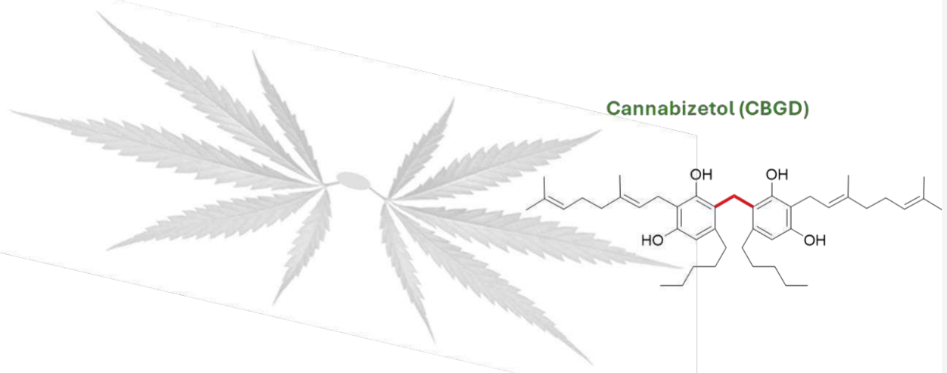
Cannabizetol, a Novel Cannabinoid: Chemical Synthesis, Anti- inflammatory Activity and Extraction from Cannabis sativa L
J. Nat. Prod., 2025
We report the first isolation of a previously unknown cannabinoid, cannabizetol (CBGD, 7), from Cannabis sativa extracts, representing the third member of the rare class of methylene-bridged dimeric cannabinoids.
Sustainable Synthesis of 1,2,3-Triazoles using Cyrene as a Biodegradable Solvent in Click Chemistry

ChemSusChem, 2025
The first successful synthesis of 1,2,3-triazoles using Cyrene as a biodegradable and non-toxic solvent in click chemistry has been developed. Find out more here.
PROTACs: Targeted Protein Degradation for Neurodegenerative and Cancer Targets
We are developing innovative PROTACs to degrade disease-related proteins implicated in neurodegenerative disorders (e.g. tau protein, DASPO) and cancers (tubulin). These bifunctional molecules hijack the ubiquitin-proteasome system to selectively remove otherwise undruggable targets.
Key publications: Pharmaceutics 2023, 15(5), 467; https://doi.org/10.3390/pharmaceutics15051467 BioRxiv 2025, https://www.biorxiv.org/content/10.1101/2025.05.22.655572v1

The project is coordinated by Prof. Passarella, member of the European research network ProteoCure – COST ACTION 20113.
A Blood-Brain Barrier-permeable Guanylhydrazone analogue of the ASIC3 activator GMQ inhibits human Glioblastoma stem cell growth in Vitro

ChemMedChem, 2026
A Blood–Brain Barrier‐Permeable Guanylhydrazone Analogue of the ASIC3 Activator GMQ Inhibits Human Glioblastoma Stem Cell Growth In Vitro (PNS) and activated by extracellular H , that is dysregulated in peripheral neuropathic pain. ASIC3 was found in stem cells of central nervous system (CNS)–located glioblastoma multiforme (GBM CSCs), and its chronic activation kills dysfunctional GBM CSCs without any effect on ASIC3-lacking CNS tissues. We rationally designed and synthesized blood–brain barrier (BBB)– compliant analogues of GMQ, a known guanidyl quinazoline ASIC3 activator; we replaced its guanidine group with a guanyl hydrazone (GH) and carried out scaffold substitutions and other structural variations in 16 GMQ analogues to establish a struc- ture–activity relationship (SAR). Our more potent GH analogue 1a showed specific activity against GBM CSC neurospheres, coupled with a better safety profile on mammalian nontumor cells and a better brain-to-plasma ratio compared with GMQ. Such results provide valuable insights for further structural optimization of heteroaryl GHs as ASIC3 modulators.
Synthesis of Sulfonamides in the Biobased Solvent Cyrene

ChemistryOpen, 2026
An alternative and efficient protocol for sulfonamide synthesis using the biobased solvent Cyrene is reported. A broad range of amines reacts smoothly with sulfonyl chlorides at room temperature, furnishing 20 sulfonamides in moderate to high yields within 30–60 min. Products are isolated by simple precipitation without chromatography, while Cyrene can be recovered (up to 79%) and reused without loss of performance.
Stereodefined Synthesis of 3-Difluoromethyl-Benzoxaboroles: Novel Antimicrobials with Unlocked H-Bonding

Organic letters, 2026
Benzoxaboroles, prominent scaffolds in medicinal chemistry, are typically modified on the benzene ring. In contrast, functionalization of the oxaborol ring is less common and often challenging. Indeed, 3-hydroxy-benzoxaboroles are virtually impossible to isolate due to their tautomeric equilibrium with the carbonyl form. In this work, we introduce a novel class of stereodefined 3-difluoromethyl-benzoxaboroles. The replacement of the hydroxy group with −CHF2 preserves stability while promoting bioactivity, owing to the lipophilic H-bond donor properties of the latter. Find out more here.
Photochemical C4-Selective C–H Amination of Quinolines via N-Shift of Heteroaryl Azides

Organic letters, 2026
We report a photochemical strategy enabling the direct synthesis of 3,4-diaminoazines through C3-to-C4 nitrogen migration (N-shift). Blue LED irradiation of 3-azidoquinolines at room temperature allows C4-selective C–H amination while concurrently installing diverse amines at the C3–position. In contrast, N-shifts in 3-azidopyridines preferentially form diazepines, reflecting divergent reactivity governed by N-heterocycle electronics, as supported by computational analysis.
Safracin B as a Synthetic Linchpin: From Natural Product to Drug Intermediate and Beyond

Eur. J. Org. Chem., 2026
The reactivity of safracin B is investigated as a platform for the efficient synthesis of cyanosafracin B and safracin A, with particular emphasis on the optimization of reaction conditions to achieve high yield and purity. In addition, a complete assignment of the nuclear magnetic resonance spectra of these structurally complex members of the safracin family is reported. Overall, this study deepens the understanding of structure–reactivity relationships within safracin natural products and highlights their value as versatile scaffolds for synthetic, analytical, and medicinal chemistry applications.
Synthesis of α-fluorocinnamate derivatives as novel cathepsin S inhibitors with in vitro antiproliferative activity against pancreatic cancer cells

Bioorg. Med. Chem., 2025
We have designed and synthesized three new derivatives basing on an isosteric replacement (H–F) at the level of cinnamate moiety. These derivatives emerged as potent covalent inhibitors of CatS (1.8–2.6 µM) with 2F showing also weak inhibition activity against CatL (20 %) and CatB (29 %). In vitro assays of 2F against pancreatic cancer cell lines BXPC3 and CAPAN1 revealed significant antiproliferative activity, with IC50 = 5.79 µM and 20.75 µM, respectively. To find out more details follow the page
Rotational Motion in Bispidines: A Conformational Study
Organic Letters 2025, DOI: 10.1021/acs.orglett.5c02839
Francesco Migliano, Luca Pozzi, Andrea Citarella, Giovanni Macetti, Leonardo Lo Presti, Daniele Passarella* and Valerio Fasano*
Asymmetric Total Synthesis of (−)‐Glycybridin B, a Pharmacophore Screened Candidate for Tubulin Binding in Chemistry – A European Journal has the following publication status: Published Online
Chemistry – A European Journal 2025, DOI: 10.1002/chem.202502228
Alice Maiocchi, Maxim Shevelev, Zlata Boiarska, Juan Estévez-Gallego, Francesca Bonato, Paolo Orlando, Alessandra Chinosi, Emanuele Marcone, Andrea Citarella, Dragos Horvath, Michel O. Steinmetz, Andrea E. Prota, Alexandre Varnek, Valerio Fasano and Daniele Passarella
Structure-Based Discovery of Hsp90/HDAC6 Dual Inhibitors Targeting Aggressive Prostate Cancer
Journal of Medicinal Chemistry 2025, DOI: 10.1021/acs.jmedchem.5c00717
Andrea Citarella, Silvia Belluti, Davide Bonanni, Davide Moi, Isabella Piccinini, Arianna Rinaldi, Chiara Papulino, Rosaria Benedetti, Laura Cuoghi, Stefano Di Ciolo, Alessandra Silvani, Lucia Altucci, Luca Pinzi, Silvia Franchini, Daniele Passarella, Claudia Sorbi, Clelia Giannini, Carol Imbriano, Giulio Rastelli
Synthesis and multitarget inhibitory effect of indole-based ethyl cinnamate derivatives against SARS-CoV-2 Mpro and cathepsins for broad-spectrum anti-coronavirus activity
Bioorganic and Medicinal Chemistry 2025, DOI: 10.1016/j.bmc.2025.118258
Andrea Citarella, Giulia Sibille, Davide Moi, Alessandro Dimasi, Tommaso Braga, Lorenzo Dal Col, Lorenzo Ruberto, Stefano Pieraccini, Maurizio Sironi, Nicola Micale, Tanja Schirmeister, Valerio Fasano, Alessandra Silvani, Clelia Giannini, Giorgio Gribaudo, Daniele Passarella
Design, synthesis and characterization of aryl bis-guanyl hydrazones as RNA binders of C9orf72 G4C2 extended repeats
European Journal of Medicinal Chemistry, 2025, 293, 117736, DOI: 10.1016/j.ejmech.2025.117736
Alice Maiocchi, Martina Pedrini, Veronica Ferrari, Agata Sofia Assunçao Carreira, Vincenzo Maria D’Amore, Federica Santoro, Anna Di Porzio, Maddalena Bosetti, Riccardo Cristofani, Alessandra Silvani, Diego Brancaccio, Luciana Marinelli, Francesco Saverio Di Leva, Alessandro Provenzani, Angelo Poletti, Pierfausto Seneci
Automated fluorine-18 radiolabeling via an alkyne–azide cycloaddition reaction on a dual peptide-functionalized liposome surface for in vivo PET imaging
Frontiers in Pharmacology, 2025, 16, 1–16. DOI: 10.3389/fphar.2025.1566257
Marco Iannone, Marcelo Kravicz, Paolo Rainone, Antonia I. Antoniou, Stefano Stucchi, Silvia Valtorta, Arianna Amenta, Elia Anna Turolla, Sara Pellegrino, Daniele Passarella, Elisa Vino, Sergio Todde, Francesca Re, Pierfausto Seneci, Rosa Maria Moresco